A first classroom in Spanish
The playgroup is designed for young children who need a reassuring first contact with Spanish. Teachers use short activities, repeated language and a predictable class rhythm so children can listen, join in and feel successful even before they speak much.
- Small preschool groups
- Native Spanish-speaking teachers
- Songs, stories, games and craft
- No previous Spanish required
Language through movement and routine
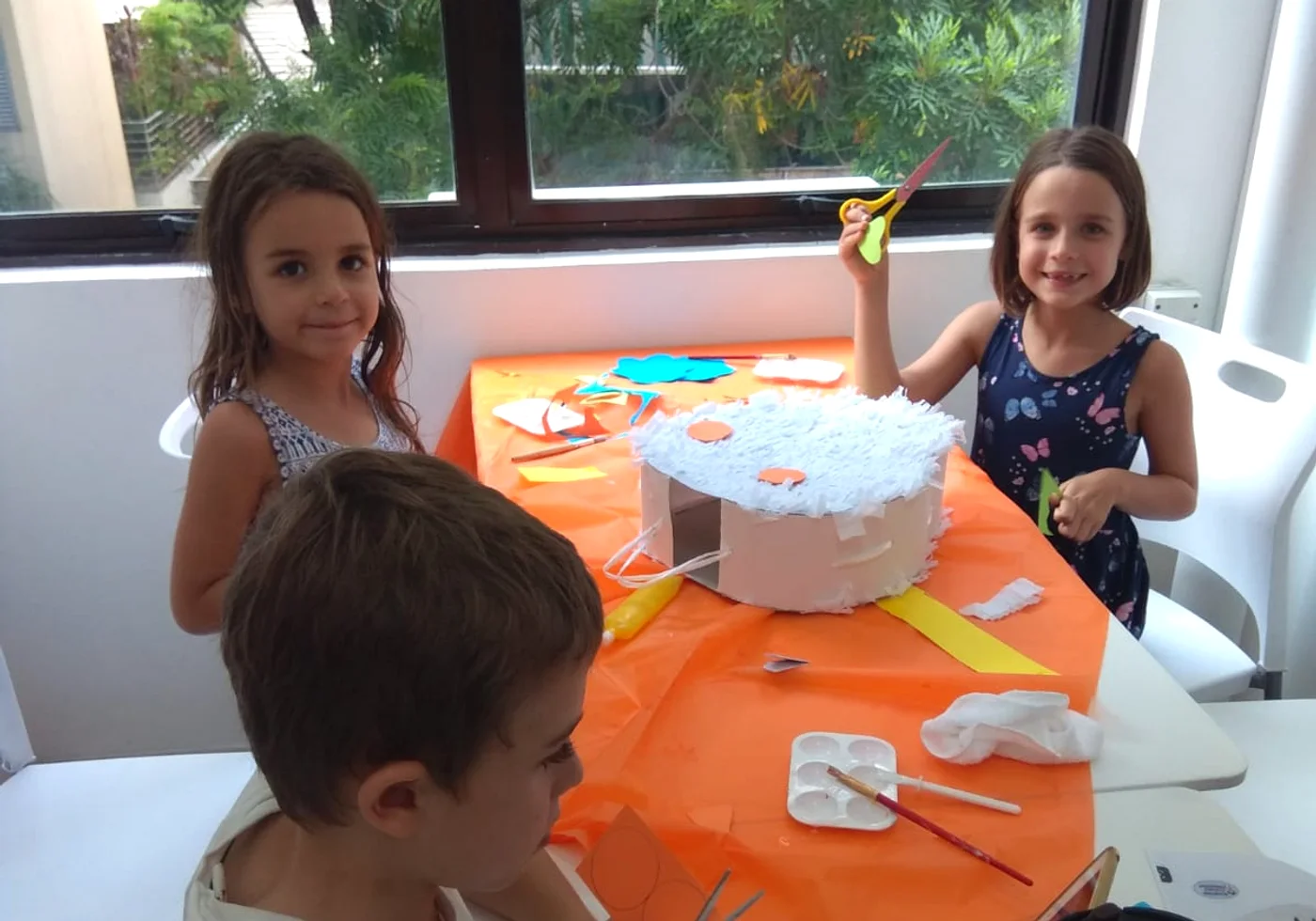
Children hear Spanish attached to concrete actions: sitting down, choosing a colour, greeting a friend, following a song, finding an object or making something with their hands. The repetition is intentional, but the class still feels light and playful.
For beginners and Spanish-speaking families
Some children arrive with no Spanish at all; others hear Spanish at home and need a social space to use it. The teacher adjusts prompts and expectations so each child can participate at their own stage, through words, gestures, songs or simple answers.
What children begin to recognise
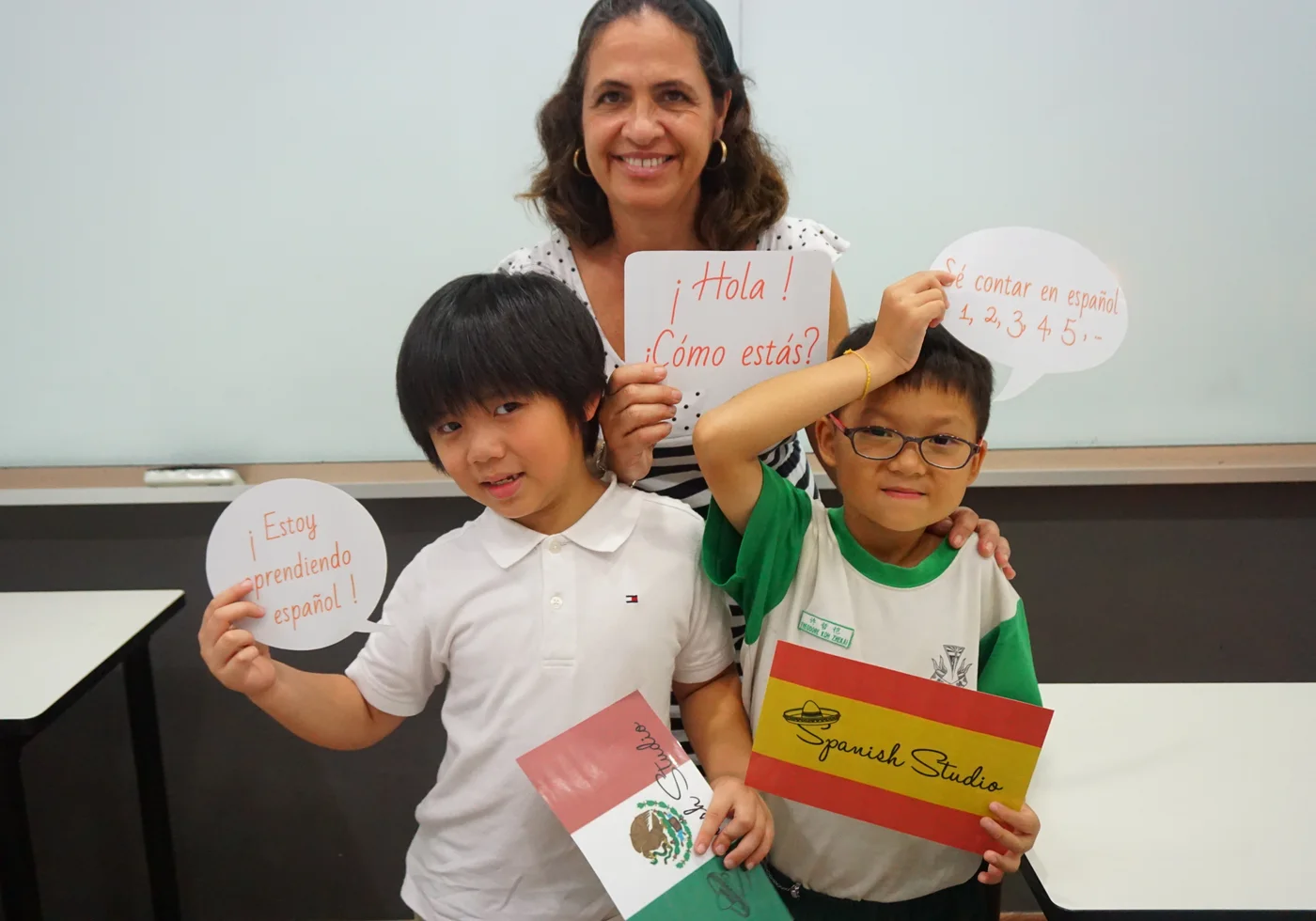
The focus is early oral confidence: greetings, colours, numbers, classroom words, food, seasons, feelings and simple instructions. Over time, children also practise turn-taking, listening to a teacher and speaking in front of a small group.
- Hola, adios and polite classroom phrases
- Colours, numbers and familiar objects
- Repeated songs and story language
- Simple questions, answers and routines
A bridge to primary Spanish
Regular exposure helps children build pronunciation and positive associations with Spanish before moving into a more structured primary course. It also helps parents see whether their child is ready for a longer weekly class.